What is AAC?
AAC, or Augmentative and Alternative Communication, refers to a set of tools, strategies, and techniques designed to assist individuals who face challenges with verbal communication. This term encompasses a wide range of methods, from simple gestures to sophisticated speech-generating devices, all aimed at helping people effectively express their thoughts, needs, and emotions.
AAC is often used by individuals with conditions such as autism spectrum disorders, cerebral palsy, developmental disabilities, or speech and language disorders. It is also beneficial for those recovering from brain injuries or other physical conditions that impact their ability to speak. By providing alternative methods of communication, AAC empowers individuals to connect with others and improve their quality of life.
How does AAC help individuals?
Empowering communication
AAC gives individuals who face challenges with spoken language a way to share their thoughts, feelings, and needs. Whether it’s a simple gesture, a picture board, or an advanced speech-generating device, AAC tools help users convey messages effectively. This is especially crucial for people with conditions like autism spectrum disorders, cerebral palsy, or brain injuries, where traditional verbal communication may be limited.
Improving daily functionality
From ordering food at a restaurant to participating in family conversations, AAC enables users to perform everyday tasks with greater independence. Communication devices and picture boards provide practical solutions for individuals to interact in various settings, fostering their autonomy.
Enhancing social connections
Effective communication is the foundation of building relationships. AAC helps users connect with their peers, family members, and the broader community. For children, it supports their ability to engage in school activities and play, while for adults, it can assist in maintaining relationships and professional roles.
Supporting learning and development
For children with developmental disabilities or speech disorders, AAC plays a critical role in educational settings. It helps them communicate with teachers and classmates, allowing them to actively participate in learning activities. AAC also aids in developing literacy skills, as tools like alphabet boards and typing devices encourage writing and language comprehension.
Facilitating rehabilitation and therapy
Individuals recovering from injuries, such as strokes or traumatic brain injuries, often face temporary or permanent communication challenges. AAC becomes an essential part of their rehabilitation, providing immediate ways to communicate while also supporting long-term recovery. Speech-language pathologists frequently integrate AAC strategies to assist patients in regaining or compensating for lost abilities.
What are AAC devices?
AAC devices range from simple, low-tech tools to sophisticated, high-tech technologies. Here’s an overview of their types and how they function:
Low-tech AAC devices
Low-tech AAC devices are non-electronic tools that assist communication in straightforward, user-friendly ways. They often rely on physical interaction and visual aids, making them ideal for individuals who need simple, practical solutions. Examples include:
- Communication boards with pictures, symbols, or letters.
- Picture exchange systems where users point to or exchange cards to convey messages.
- Letter boards for spelling out words.
These devices are portable, cost-effective, and easy to use in various environments, from home to school or therapy sessions.
High-tech AAC devices
High-tech AAC devices leverage advanced technology to offer dynamic and customizable communication options. These devices are often electronic and can include features like voice output and adaptive controls. Common examples include:
- Speech-generating devices (SGDs): These devices convert text or symbols into spoken words, allowing users to “speak” through the device.
- Eye-gaze systems: Users control the device by looking at specific areas on a screen, a valuable option for individuals with limited physical mobility.
- Touchscreen tablets with AAC software: Apps like Proloquo2Go or Snap Core First turn standard devices into powerful communication tools.
- Scanning-based devices: These allow users to select messages through switches or scanning mechanisms.
Who can benefit from AAC?
Augmentative and Alternative Communication (AAC) provides essential support for individuals who face challenges with verbal communication. This innovative approach is not limited to a specific age group or condition but is beneficial across a wide spectrum of needs. Here are some groups who gain the most from AAC systems and strategies:
Individuals with developmental disabilities
People with conditions like autism spectrum disorders, cerebral palsy, or Down syndrome often experience difficulties in verbal communication. AAC offers tools and methods to help them express their thoughts, interact with others, and participate actively in educational, social, and daily activities.
Those with acquired communication challenges
Injuries or illnesses such as strokes, traumatic brain injuries, or neurological disorders (e.g., ALS or Parkinson’s disease) can lead to temporary or permanent communication difficulties. AAC provides alternative ways to communicate, whether during recovery or as a long-term solution, enhancing independence and interaction.
Children with delayed speech and language development
Early intervention with AAC tools like picture boards, alphabet boards, or speech-generating devices can significantly improve communication for children struggling with speech development. AAC supports language acquisition, literacy skills, and social engagement, ensuring children can thrive in school and at home.
People with speech or language disorders
Conditions like apraxia of speech, aphasia, or speech sound disorders can limit a person’s ability to articulate words. AAC enables these individuals to communicate effectively by offering alternative or supplemental communication methods tailored to their abilities.
Those with physical disabilities affecting speech
Motor impairments caused by conditions like cerebral palsy or spinal cord injuries can make speaking difficult. High-tech AAC devices, such as eye-gaze systems or switch-activated communication tools, allow individuals to convey messages without relying on traditional speech.
Elderly individuals with degenerative conditions
For seniors experiencing conditions like dementia or Alzheimer’s disease, AAC tools provide support as verbal abilities decline. Simple systems like picture boards or advanced devices can help maintain communication with family members and caregivers.
People with temporary communication needs
AAC is not limited to long-term communication challenges. For instance, individuals recovering from surgery or experiencing short-term conditions that impact their ability to speak can use AAC tools to bridge the gap until verbal abilities return.
How to implement AAC?
The successful implementation of Augmentative and Alternative Communication (AAC) requires careful planning, collaboration, and ongoing evaluation to meet the unique needs of the individual. Here is a step-by-step guide to effectively integrate AAC into daily life:
1. Conduct an AAC assessment
An AAC assessment is the foundation of successful implementation. A team of professionals, including speech-language pathologists (SLPs), occupational therapists, and caregivers, evaluates the individual’s communication abilities, physical capabilities, and specific needs. Key steps include:
- Identifying communication goals (e.g., expressing needs, social interaction).
- Assessing motor skills to determine the best access method (e.g., touch, eye gaze, or switches).
- Evaluating cognitive and linguistic skills to select appropriate tools.
- Considering the environments where the individual communicates (home, school, workplace).
2. Select the right AAC tools and methods
Based on the assessment, choose AAC tools that align with the individual’s needs. Options include:
- Low-tech tools: Communication boards, picture cards, or letter boards.
- High-tech devices: Speech-generating devices (SGDs), tablets with AAC apps, or eye-tracking systems.
- Integrated methods: Combining gestures, sign language, or tactile systems with aided communication tools.
Customization is key—ensure the vocabulary, symbols, or features are relevant to the individual’s daily activities and interests.
3. Provide training and support
Implementing AAC requires training for both the individual and their support network. This includes:
- Teaching the individual how to use the selected AAC tools effectively.
- Training caregivers, teachers, and peers to recognize and respond to AAC communication.
- Encouraging consistent use of AAC tools across different settings.
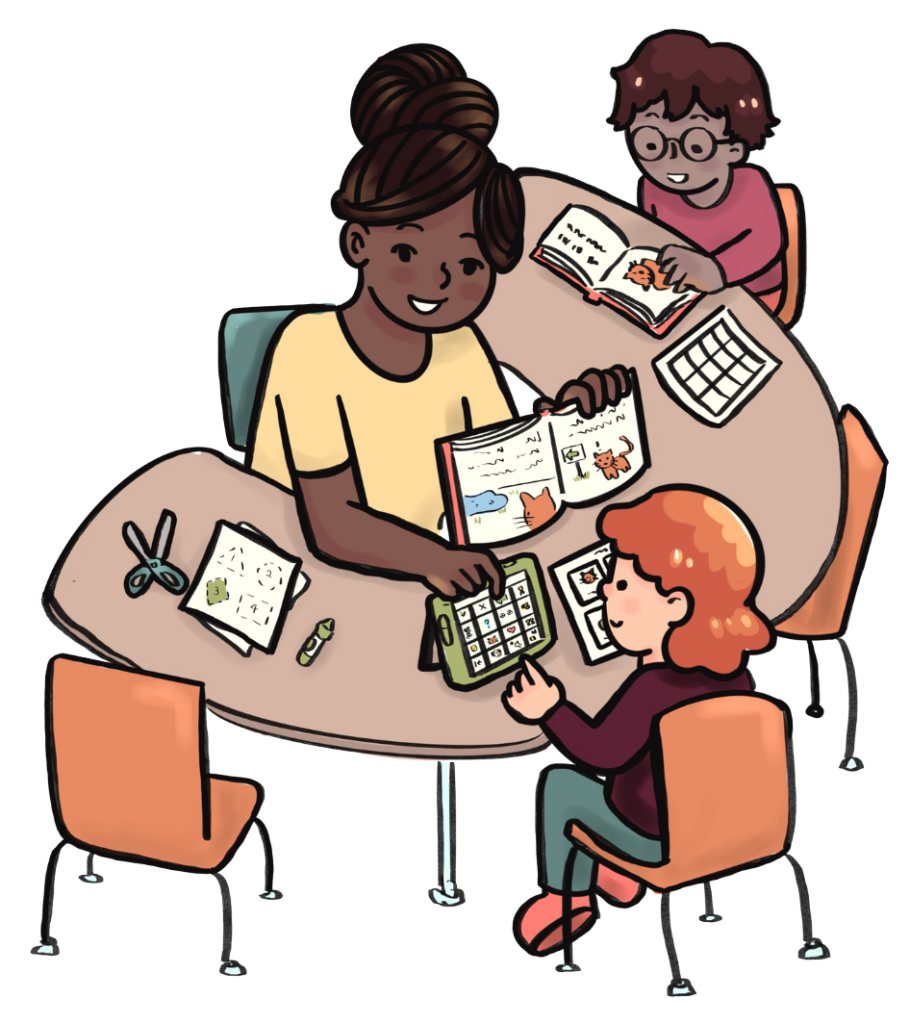
Aided language stimulation, where communication partners model AAC use during interactions, is a proven strategy for teaching AAC.
4. Integrate AAC into daily activities
AAC is most effective when it becomes a natural part of daily routines. Strategies include:
- Using Aided Language Displays (ALDs) or communication boards during structured activities like meals or play.
- Encouraging the individual to use AAC tools in social interactions, such as greetings or group discussions.
- Setting up visual schedules or tactile supports for predictable routines.
This consistent integration helps the individual build confidence and develop communication skills over time.
5. Monitor progress and adapt the system
Regularly evaluate how well the AAC system is meeting the individual’s needs. This involves:
- Tracking communication goals and achievements.
- Making adjustments to vocabulary, layout, or technology as the individual’s skills grow.
- Addressing any technical or practical challenges with the tools.
Collaboration between the individual, their support team, and AAC professionals ensures the system remains effective and relevant.
What is the AAC community?
Advocacy groups and organizations
Advocacy groups and nonprofit organizations play a vital role in raising awareness about the importance of AAC and pushing for policy changes that support accessibility. Some notable organizations include:
- The AAC Institute: Provides resources and support for individuals and professionals working with AAC.
- The International Society for Augmentative and Alternative Communication (ISAAC): An international network promoting AAC awareness, research, and support.
- The American Speech-Language-Hearing Association (ASHA): Offers resources for AAC professionals and promotes best practices in AAC.
AAC events and conferences
AAC-related events, conferences, and workshops provide opportunities for members of the AAC community to gather, share knowledge, and discuss best practices. Notable events include:
- ISAAC Conferences: A global conference where professionals, researchers, and AAC users can exchange ideas, showcase new technology, and discuss challenges in the field.
- Local AAC Support Groups: Community-based events where families and individuals can meet to share experiences and learn from others.
- Workshops and Training Sessions: These are organized by schools, clinics, and AAC organizations to provide hands-on training for professionals and families.
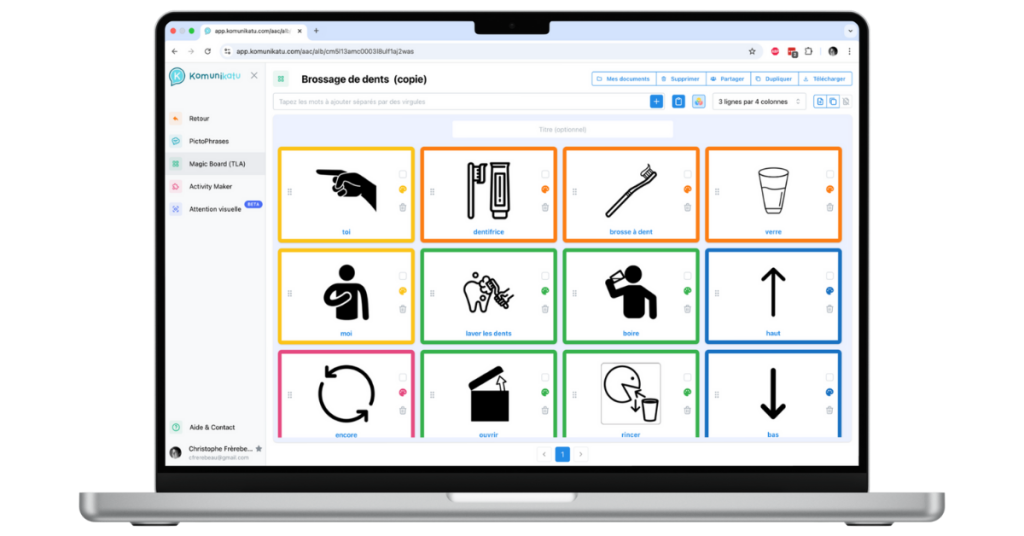
Create AAC materials with ease using Komunikatu
Komunikatu is an app designed for speech therapists, occupational therapists, special education professionals, and their clients. It offers evidence-based tools that help quickly create materials for effective therapy.